Honey Lexicon
Every honey has its own character
Colour, taste, texture and crystallisation: a short guide to the honeys and bee products in our range, and how to use them on a breakfast buffet, in the bar and in the kitchen.
Acacia honey
Made from the white blossom of the black locust tree, which flowers for only a week or two in late spring. Our bees collect it in our own acacia forest. It is the mildest of all our honeys, which is why guests of every age like it.
ColourWater-clear to pale straw yellow
TasteDelicate, sweet, lightly floral with a hint of vanilla
CrystallisationVery slow: stays liquid for a year or more
Best forBreakfast buffet, tea, yoghurt, desserts
For hotels: it does not overpower tea or coffee, and it stays runny for a long time in breakfast jars and sachets.
Comb honey
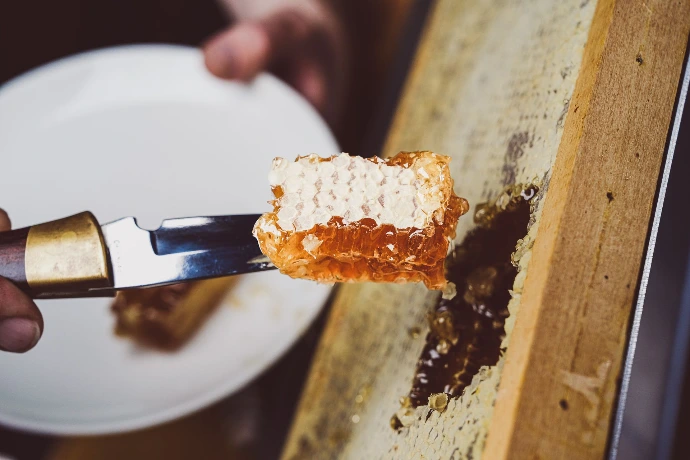
Honey exactly as the bees store it: sealed in hexagonal beeswax cells, never extracted, heated or filtered. Our honeycomb comes in its original wooden beekeeping frame. The wax is edible, so guests simply cut a slice and eat it with the honey.
ColourPale gold acacia honey in white wax cells
TastePure acacia honey with a soft, chewy wax texture
CrystallisationVery slow, as it is acacia honey
Best forBreakfast buffet, cheese boards, gifts
For hotels: one 3 kg frame lasts about 4 days in a 100-room hotel. Serve it in a stainless steel stand with a small knife, and let guests cut their own slice.
Linden honey
Bees make it from the fragrant early-summer blossom of linden (lime) trees. It is easy to recognise by its fresh, almost minty aroma.
ColourLight yellow to amber, sometimes slightly greenish
TasteFresh, aromatic, with a cool, minty finish
CrystallisationWithin a few months, into fine crystals
Best forHerbal tea, cheese boards, salad dressings
Silkweed honey
A rare honey from the flowers of common milkweed (silkweed), which blooms in midsummer on sandy soils around our apiary. Few regions in Europe produce it in larger quantities.
ColourLight golden
TasteRich, fruity and floral, with a caramel note
CrystallisationSlow
Best forTea, desserts, gift jars
Chestnut honey
Collected from the blossom of the sweet chestnut tree. The boldest of our honeys: dark, intense and pleasantly bitter, a favourite of chefs.
ColourAmber to dark brown
TasteStrong, aromatic, with a bitter-sweet finish
CrystallisationSlow
Best forBlue and aged cheeses, glazes, sauces for game
Rapeseed honey
The first big honey of spring, from the bright yellow rapeseed fields. It crystallises quickly into a smooth, spreadable cream.
ColourPale cream to almost white when set
TasteMild and sweet
CrystallisationVery fast: within one to two weeks
Best forCreamed honey, spreading on bread, baking
Sunflower honey
A late-summer honey from sunflower fields, with a sunny colour and a pleasantly aromatic taste. It is often made into creamed honey.
ColourGolden yellow to orange
TasteAromatic, slightly tangy
CrystallisationMedium-fast
Best forBaking, buttered toast, tea
Wildflower honey
Made from the nectar of many different meadow flowers, so every harvest is a little different. A full-bodied, versatile everyday honey.
ColourLight gold to dark amber, depending on the season
TasteRich and rounded, with varied floral notes
CrystallisationMedium
Best forHotel kitchen, baking, marinades, tea
Beeswax
Young worker bees produce wax from glands on their abdomen and use it to build the honeycomb. It is the edible wax in our comb honey, and it is also used to make candles, food wraps and cosmetics.
ColourWhite to golden yellow
ScentNaturally sweet, honey-like
UsesComb honey, candles, wax wraps, balms
Propolis
A sticky resin that bees collect from tree buds and use to seal and protect the hive. It is most often sold as a tincture.
ColourBrown to dark brown
TasteStrong, resinous, slightly bitter
UsesTinctures, drops, natural cosmetics
Good to know
Crystallisation is natural. Real honey sets sooner or later, depending on its sugar balance. It is a sign of quality, not of spoilage. To make it runny again, warm the closed jar gently in a water bath, below 40 °C.
Storage. Keep honey closed, at room temperature, in a dry place away from direct sunlight. It does not need a fridge.
Please note: honey is not suitable for babies under 12 months.
Taste the difference
Ask for a free tasting box for your team, or try our honeycomb on your buffet for a month.